From Accumulation to Distribution: Returning to Oregon Business Academy
The Inevitable Pivot: From Accumulation to Distribution
It is a peculiar milestone in one’s career when the relentless forward push, the perpetual hunt for the next mentor, the next promotion, the next LinkedIn connection, gradually gives way to the necessity of looking backward. Backward is not down nor does it presuppose a gap in skill or ambition, quite the opposite in my experience, but rather backward toward those who are coming up behind you.
Transitioning from an individual contributor to a leadership role often acts as the catalyst for this shift. Suddenly, the objective is no longer solely about the personal accumulation of skills or connections, but about the sharing of that acquired experience with the generation who’s time is about to come. Deliberately investing time to ensure the durability of the institutions that had such a role in your formative years is an exercise in both gratitude and, counterintuitively, professional advancement.
Compound Interest on a 2010 Investment
My own career’s early acceleration can be traced back to a serendipitous, top-of-funnel marketing event: my father, frustrated in traffic in the spring of 2010, hearing a radio advertisement for “Young Entrepreneur’s Business Week” (YEBW) at hosted at Oregon State University. That single ad placement fundamentally altered the trajectory of both my career and that of my brother.
Over three consecutive summers of YEBW’s rigorous curriculums, I built connections that served as a literal springboard into the professional world. It was there I met Zeke Camusio, who’s story about immigrating from Argentina to the US, becoming a serial entrepreneur and traveling the world showcased the exact blueprint of ambition I was searching for during my formative years. Two years later, Zeke would hire me for my first post-college role. My brother experienced a nearly identical “launchpad” moment, securing his first full-time role through the network he built at the camp.
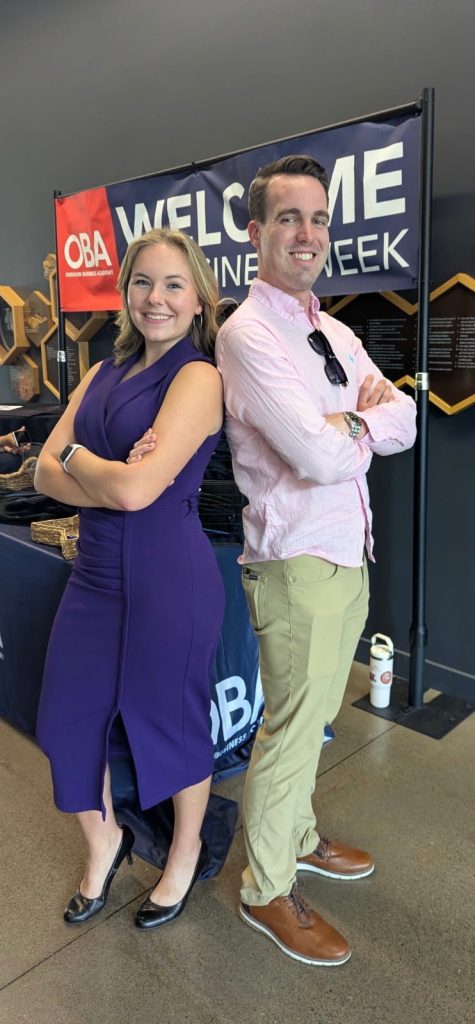
Like many non-profits operating physical events, YEBW became a financial casualty of the pandemic, ceasing operations around 2020. Yet, the compounding impact it had already made on Oregon’s business ecosystem demanded a successor. From those operational ashes emerged the Oregon Business Academy (OBA). Under the leadership of CEO Anne Adler and YEBW veteran Justin Hendrickson, the institution was revitalized. After a few persuasive conversations, Justin successfully recruited not one, but both Kaeding brothers to return as Company Advisors for the Summer 2025 program.
Inside the Crucible: Surviving the OBA Sprint
The modern OBA curriculum is a highly condensed, high-intensity one-week sprint. As a Company Advisor, I was tasked with overseeing a cohort of 11 high school students as they navigated the fundamentals of business operation and capital allocation. Luckily, each of the CAs were assigned an “intern” who would help with all of the logistical aspects associated with running day to day operations. I was fortunate enough to be paired with Abby Blackburn, an incoming freshman to Oregon State University and an alumni of the program from previous years. Needless to say, the students benefited immensely from her experience as well.
The week hinged on two core deliverables. First, students ran a simulated manufacturing company (using a tool called Bizsim) requiring them to formulate a corporate strategy, manage a P&L, and defend their results before a panel of judges. Second, teams were required to develop a net-new venture, complete with a product roadmap, business plan, and financial model, culminating in a Shark Tank-style pitch for investment.
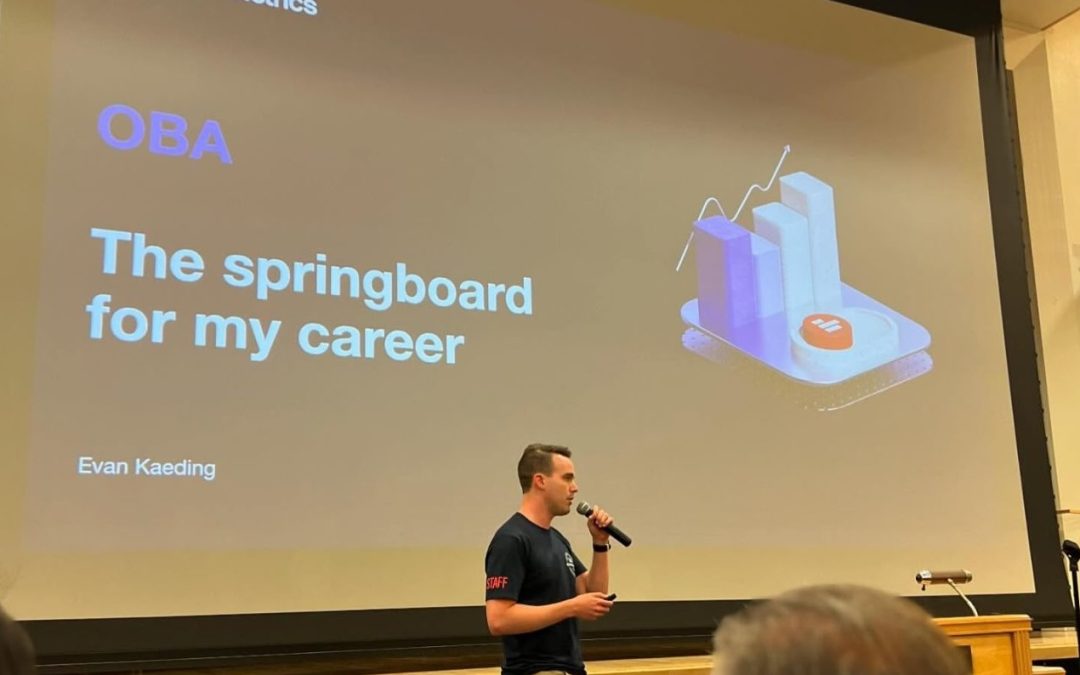
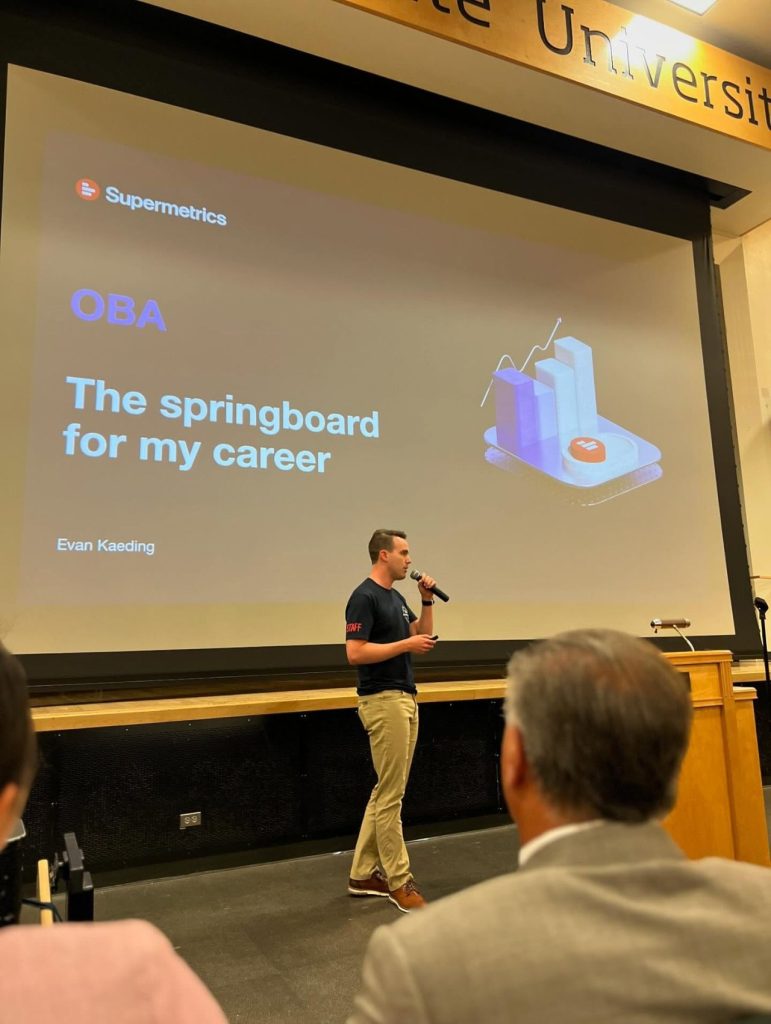
To kick off the week, I had the privilege of sharing my career story with an auditorium of nervous teenagers and their visibly relieved parents ready for a week away from their kids. I shared the story of that 2010 radio ad—a testament to the outsized, long-tail impact a single, well-timed marketing message can have on a life. It was a fitting preamble to the grueling week ahead.
European Vacation Days, American Work Hours
Sharing a dorm room with my brother and donning our proverbial camp counselor hats, we quickly rediscovered the specific, nostalgic endurance required to consume college canteen meals and attend 7:30 AM briefings. The operational cadence was relentless, frequently pushing past 11 PM.
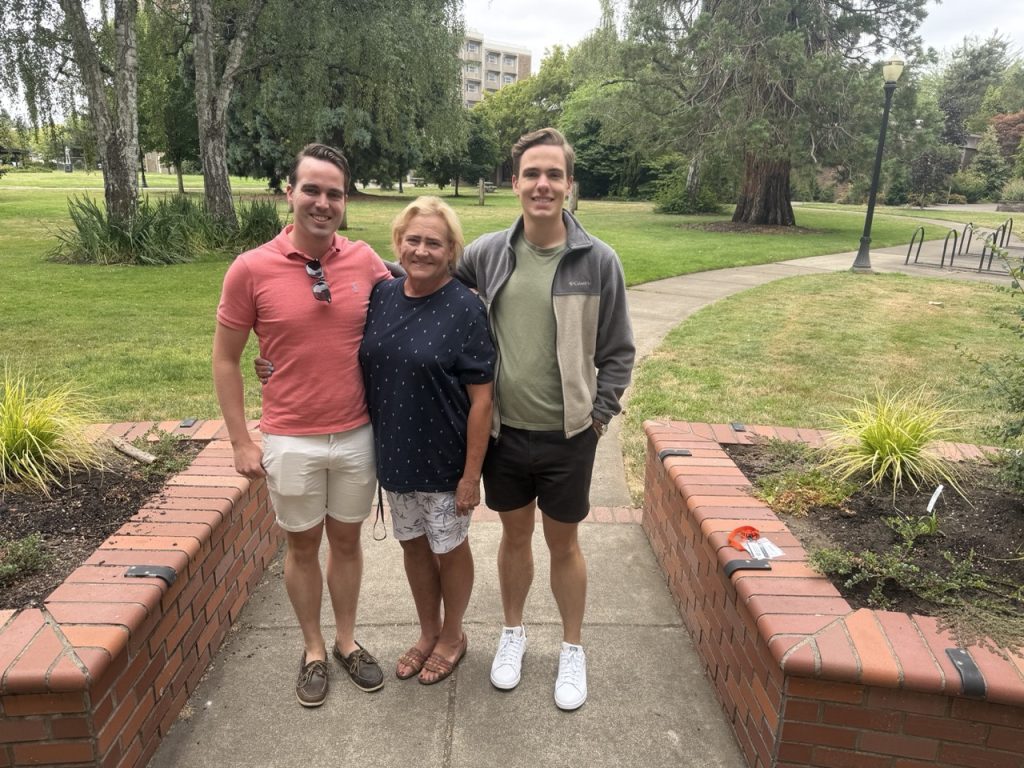
I had allocated a decent chunk of my annual paid time off for this endeavor, crossing 10 timezones and operating under the naive assumption that a week away from the office would provide a restorative break. I returned to my desk in Finland a few weeks later profoundly gratified, but altogether physically and mentally in need of an actual vacation.
Volunteering at this level is a high-yield investment in the next generation of business leaders, but it is certainly not a mechanism for personal energy recovery and hardly confers the same benefits of the standard Finnish summer holiday at a lakeside cottage. Next time, I’ll make sure to extend my stay in Oregon and manage my PTO allocation accordingly.