
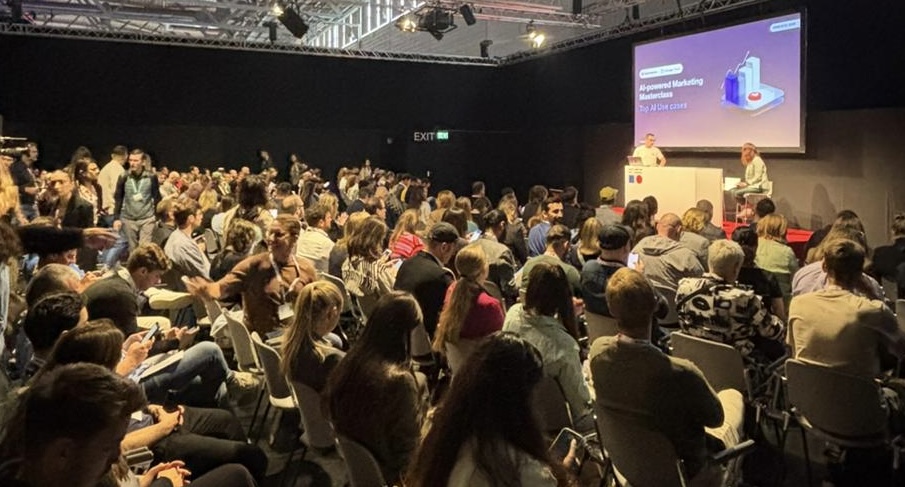
If there is one thing that became abundantly clear at DMEXCO this year, it’s that the marketing landscape is shifting at a breakneck pace. This year’s Digital Marketing Expo & Conference in Cologne, Germany was an incredible way to kick off the fall season.
I had the distinct privilege of co-presenting an AI-powered marketing masterclass alongside Ksenia Nekrasova from Google Cloud. Our goal was to show exactly how AI is changing the marketing and advertising industry as we know it. We knew the topic was timely, but we were absolutely blown away by the turnout. With over one thousand registrants and a maximum capacity of 200, it was truly “standing room only” in the Masterclass hall.
Here is a recap of what we covered, the top AI use cases that resonated most with the audience, and how you can start implementing these strategies today.
The Core Challenge: Too Much Data, Too Little Time
We kicked off the masterclass by addressing the elephant in the room: marketers today are drowning in data. We are dealing with 230% more data than we had in 2020. Average query counts are up, and the granularity of the data we are pulling has doubled.
Yet, despite this wealth of information, a staggering 56% of marketers admit they simply don’t have the time to analyze their data thoroughly. That is exactly where AI steps in: not as a replacement for strategic thinking, but as an essential aid to help agencies and brands make better, faster decisions.
Introducing the AI Toolbox
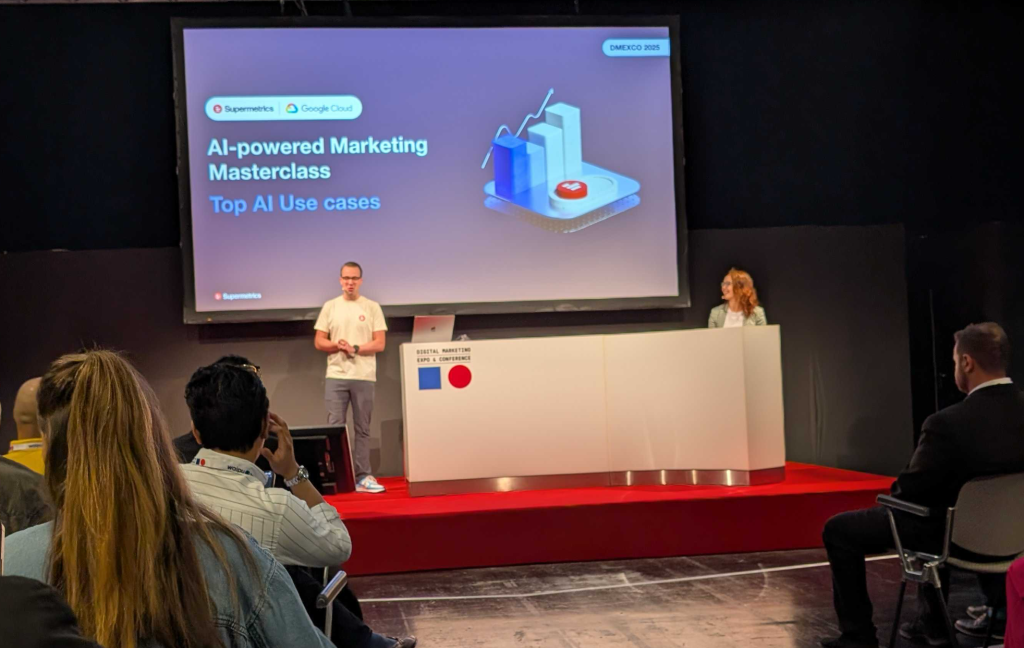
To solve this data fatigue, we introduced a modern AI toolbox built on the long-standing partnership between Supermetrics and Google. By leveraging tools like Looker Studio Pro, BigQuery, Google AgentSpace (now called Gemini Enterprise), and NotebookLM, marketers can finally unify their data and workflows.
During the session, we walked through 8 distinct AI use cases. Here are a few that sparked the most conversation throughout the day:
1. AI Text Enrichment & Image Decomposition
One of the crowd favorites was our deep dive into AI text enrichment. In fact, several attendees noted how informative this specific demo was. We showed how you can prompt AI to analyze the sentiment of social media comments, suggest entirely new ad copy, and translate localized campaigns seamlessly.
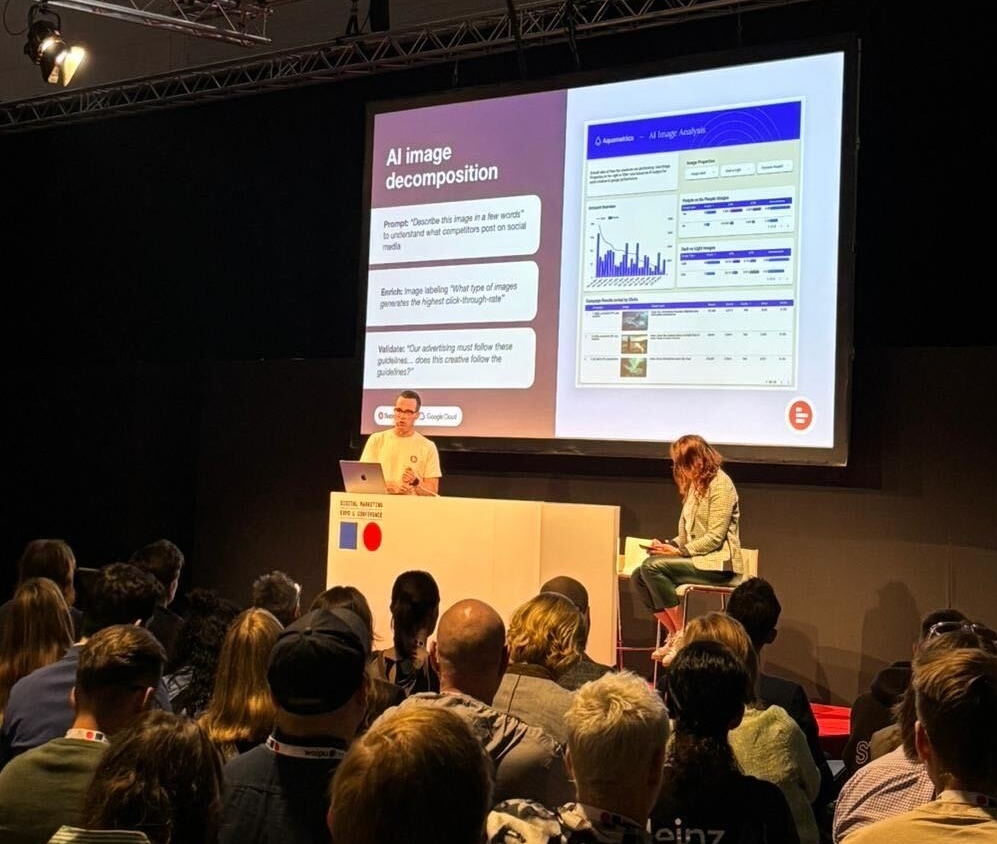
We also showcased AI Image Decomposition. By automatically labeling images (e.g., “contains people,” “dark vs. light”) and tying those properties back to performance metrics like CTR and CPA, advertisers can finally quantify why certain creatives perform better than others.
2. Conversational Analytics and AI-Generated Reporting
Another major focus was streamlining the reporting process. Using Looker Studio Pro, we demonstrated how marketers can ask questions of their BigQuery data in a natural, conversational format.
Need to present to the C-suite? We showed how the Gemini AI-collaborator can summarize charts and generate campaign reports in less than a minute. For monthly check-ins, embedding AI-updating charts directly into Google Slides ensures your executive team always has the latest numbers.
3. Generating Campaign Recap Podcasts
Not all content should be consumed the same way. We demonstrated a fascinating multi-modal use case using NotebookLM: turning dense, data-heavy campaign reports into an audio overview. Producing a quick “podcast” recap saves time for executive stakeholders who need to digest performance metrics while on the go.
4. The Future: Agentic AI
We concluded by looking at what’s next: Google AgentSpace (now referred to as Gemini Enterprise). We explored how conversational agents grounded in your specific business context and metadata can empower business users. By acting as an intelligent gateway to Looker and BigQuery, these agents can conduct complex campaign analyses on your behalf.
What Will You Do Next?
The key question we left the audience with was: What is the role of AI in your organization? Whether you are looking to automate your creative production, enrich your text analysis, or deploy custom AI agents, the technology is no longer a future concept—it is here, and it is ready to be utilized.
A massive thank you to everyone who attended, to my incredible co-presenter Ksenia Nekrasova, and to Birgit Corinna Scholz for all the flawless event preparation that made this Masterclass possible.
If you weren’t able to make it to Cologne, or if you’re interested in exploring how Supermetrics and Google Cloud can transform your marketing analytics, feel free to reach out. Let’s build the future of marketing measurement together.