
Beyond the Rosé: What 30 Croisette Cabanas Reveal About Adtech's Real Plumbing in 2026
A boots-on-the-ground analysis from Cannes Lions 2026: how the ad industry pivoted from speculative generative hype to hardened infrastructure, spanning CAPI's performance inversion, LLM campaign consoles, and the agency split between contractors and landlords.
Cannes Lions has always sustained an elegant commercial hypocrisy. On the surface, Boulevard de la Croisette presents the world’s most gilded celebration of creative artistry: chilled magnums of Whispering Angel rosé, celebrity panels inside the Palais des Festivals, and mega-yachts moored in the Port de Cannes. Yet anyone who has traversed the boardwalk knows that the true economic engine operates well removed from the Grand Prix stage.
The real business of Cannes unfolds behind closed French doors in Belle Époque suites at the Carlton, across private beach cabanas along the Plage, and in shaded hotel courtyards at the Martinez. Having walked the Croisette for a second consecutive summer, the atmospheric pivot between 2025 and 2026 was unmistakable. Twelve months ago, the industry was intoxicated by the speculative promise of generative AI: flashy demo reels, ungrounded conversational bots, and frantic boardroom mandates to appear cutting-edge.
By June 2026, the party line has collided squarely with CFO reality. The overarching sentiment across thirty bilateral partner sessions was captured by an agency chief over morning espresso: the industry has graduated from “AI Curious” to demanding to be “AI Confident.” The conversation is no longer about what an LLM can generate in an afternoon sandbox; it is about how underlying data architectures, signal ingestion pipelines, and schema governance prevent autonomous agents from misallocating programmatic media budgets.
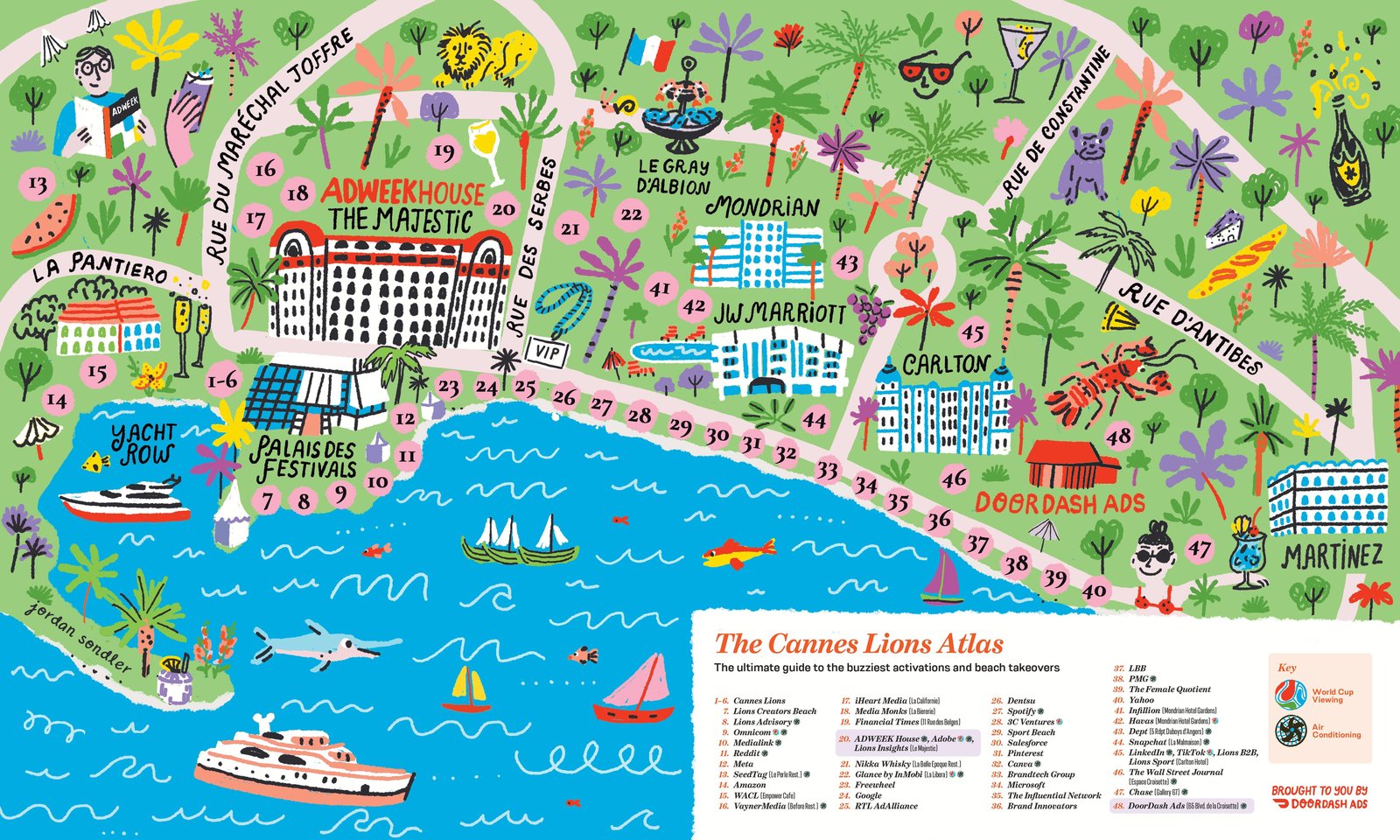 The Cannes Lions Atlas: navigating the dense strip of beach takeovers, hotel suites, and tech pavilions stretching from the Palais des Festivals to the Martinez.
The Great Inversion: CAPI as an Algorithmic Accelerator
Following Apple’s App Tracking Transparency framework and third-party cookie deprecation, server-side Conversion APIs (CAPI) were initially marketed as defensive attribution safety nets: technical patches to restore signal and maintain compliance.
In the cabanas of Cannes 2026, that defensive narrative was stood on its head. Across LinkedIn, Meta, Amazon, Snap, and Google, conversion APIs are no longer sold as measurement utilities. They are being engineered and deployed as algorithmic performance boosters.
The mechanics reflect how modern ad delivery algorithms operate. Core platform bidding engines run continuous reinforcement learning loops that calibrate real-time bids against conversion probability. Feeding a platform stale, twenty-four-hour batch reports leaves the bidding model flying blind, inflating acquisition costs. Conversely, feeding a live, server-side event stream directly into the platform’s optimization loop provides the algorithmic fuel required to depress cost-per-acquisition (CPA) targets.
This dynamic has catalyzed a dual-signal architecture across enterprise B2B advertising, which now accounts for over half of ad spend across professional networks:
- Top-of-Funnel Signals (via CAPI): Ingesting high-frequency behavioral milestones (qualified page depth, content engagement, webinar registrations) in sub-second streams to train bidding models on near-term commercial intent.
- Bottom-of-Funnel Signals (via Warehouse/CRM Sync): Streaming verified financial milestones (Sales Qualified Leads, pipeline progression, validated contract value) directly from Snowflake, BigQuery, or Databricks to reward the bidding engine for actual revenue generation.
The linchpin is deterministic join key hygiene. Without standardizing on SHA-256 hashed emails, phone numbers, and unified Qualified Lead IDs across both pipelines, the bidding engine cannot reconcile top-of-funnel clicks with bottom-of-funnel revenue. Direct warehouse-to-CAPI connectors have consequently shifted from discretionary engineering projects into baseline pipeline infrastructure.
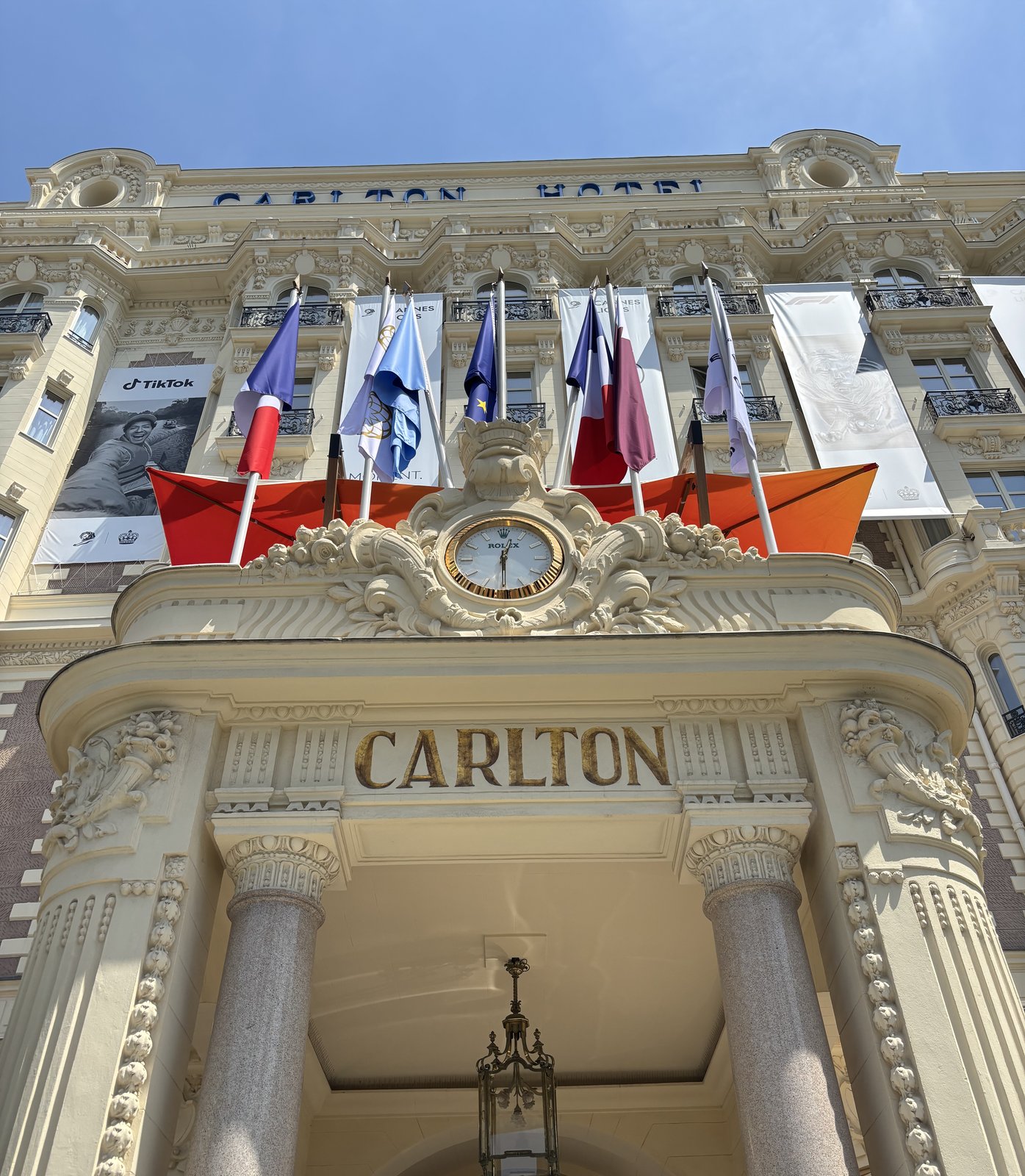 The Carlton Hotel entrance: behind the grand Belle Époque facade, hotel suites were converted into bilateral adtech war rooms.
The Conversational Console: LLMs as Campaign Management Surfaces
The most tedious tax in digital marketing has long been the fragmented, multi-tab browser routine. A performance marketer overseeing omnichannel budgets spends their week toggling across Meta Ads Manager, Google Ads, LinkedIn Campaign Manager, Amazon Advertising, Snap Ads, and Reddit Ads, navigating disparate interfaces and idiosyncratic definitions.
In 2026, the traditional campaign dashboard is visibly unbundling. Platforms and specialized middleware providers are converging on large language models (specifically Anthropic’s Claude and Google’s Gemini) as the unified orchestration layer for media execution.
The architectural pattern gaining the deepest traction is cross-platform campaign translation. For years, Microsoft Advertising operated a Google Campaign Import API, allowing search advertisers to port their Google AdWords configurations into Bing with minimal drag. Today, enterprise teams are applying this exact pattern across social, programmatic, and retail platforms via conversational agents.
Instead of navigating twelve dropdown menus to stand up a localized flight, a practitioner can instruct an LLM: “Extract our top three performing mid-funnel ad sets on Meta from Q2, translate the audience criteria into Snap and Reddit campaign taxonomies, and schedule an initial daily test budget across each network.”
To operationalize this, platforms are authoring specialized skills libraries and Model Context Protocol (MCP) servers. Rather than forcing marketers into siloed consoles, CRM and marketing hubs like HubSpot are building integrated ad agents and ad studios designed to ingest third-party telemetry and dispatch programmatic changes across disparate networks through natural language instructions.
 Adobe’s ‘Bonjour de Cannes’ installation: generative AI moved from backstage experimentation to prominent festival OOH, highlighting the tension between creative novelty and brand governance.
The Multimodal Bottleneck: Tabular Fluency vs. Creative Governance
Yet, for all the progress in conversational orchestration, Cannes exposed a glaring architectural fracture point: the friction between tabular data manipulation and multimodal creative production.
Large language models excel at structured, numerical reasoning. When tasked with analyzing pacing tables, calculating marginal return on ad spend (mROAS), generating SQL queries against a data warehouse, or rebalancing portfolio budgets, models like Claude 3.5 Sonnet and Gemini 1.5 Pro operate with precision. They understand tabular relationships natively.
When those same models manage end-to-end creative workflows inside a chat interface, the user experience rapidly falls apart.
Marketing agencies attempting to run creative production through pure LLM interfaces report immediate friction. Enforcing strict corporate brand fonts, maintaining exact hex palettes, adhering to aspect ratio constraints across nine ad formats, and managing iterative layer revisions remain deeply unreliable inside standard text-to-image prompting workflows. A generative model may render an eye-catching conceptual visual (such as Adobe’s poolside panda towering over the Croisette), but asking an LLM to reliably export forty localized display variations with pixel-perfect typography and vector logos invariably breaks down.
Pragmatic practitioners are therefore separating the conversational brain from the creative execution engine. LLMs orchestrate strategy, craft copy variants, and generate targeting parameters, while actual creative assembly is handed off via programmatic APIs to dedicated design systems such as Canva and Adobe Firefly.
Furthermore, agency executives stressed that the limiting reagent in deploying AI agents is rarely the model weights; it is human change management. Overcoming internal skepticism, retraining media planners to move from manual execution to supervisory roles, and establishing rigorous operational rails consume far more organizational energy than writing the initial API wrappers.
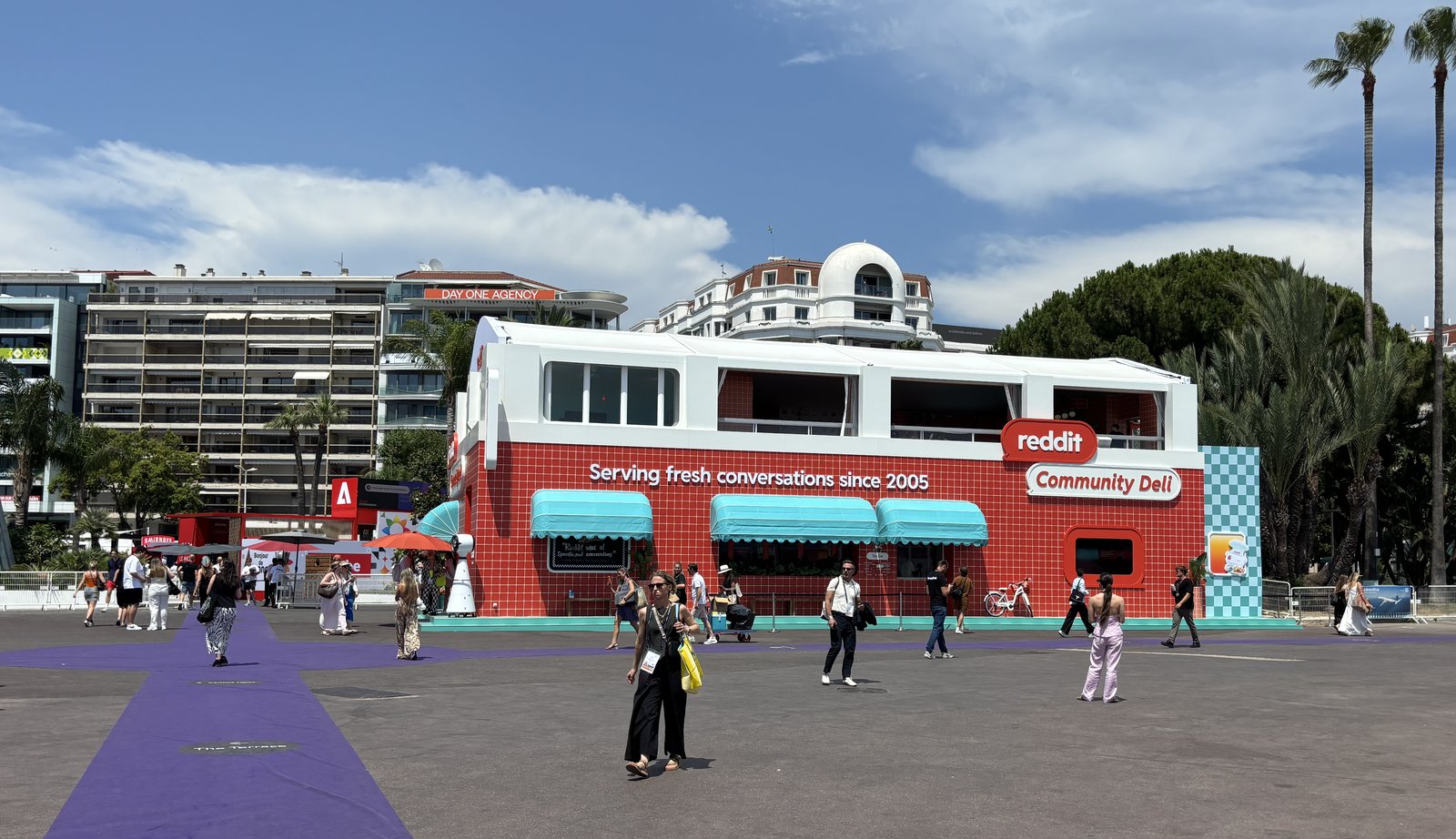 Reddit’s Community Deli on the Croisette: contextual conversations and first-party community signals emerged as crucial inputs for answer engine discovery and model training.
The Battle for Signal: Community Context and Answer Engines
Another pronounced current pulsing through Croisette activations was the scramble for unstructured conversational signal. As traditional search volume experiences disruption from conversational engines (Perplexity, ChatGPT Search, and Google AI Overviews), the mechanics of discovery are being rewritten.
This dynamic was physically embodied along the Croisette by experiential installations like Reddit’s Community Deli. For platforms developing Answer Engine Optimization (AEO) products, raw conversational data has become high-value training material. The real-time Reddit firehose, rich with authentic user recommendations, peer troubleshooting, and unvarnished product critiques, represents the primary source material modern LLMs consume to answer commercial queries.
Yet isolating commercial intent from forum discourse requires sophisticated NLP filtering. Without contextual categorization, ad placements risk appearing next to brand-damaging banter or irrelevant sentiment. First-party conversational context is valuable, but transforming discussion threads into deterministic advertising signals remains an active engineering challenge.
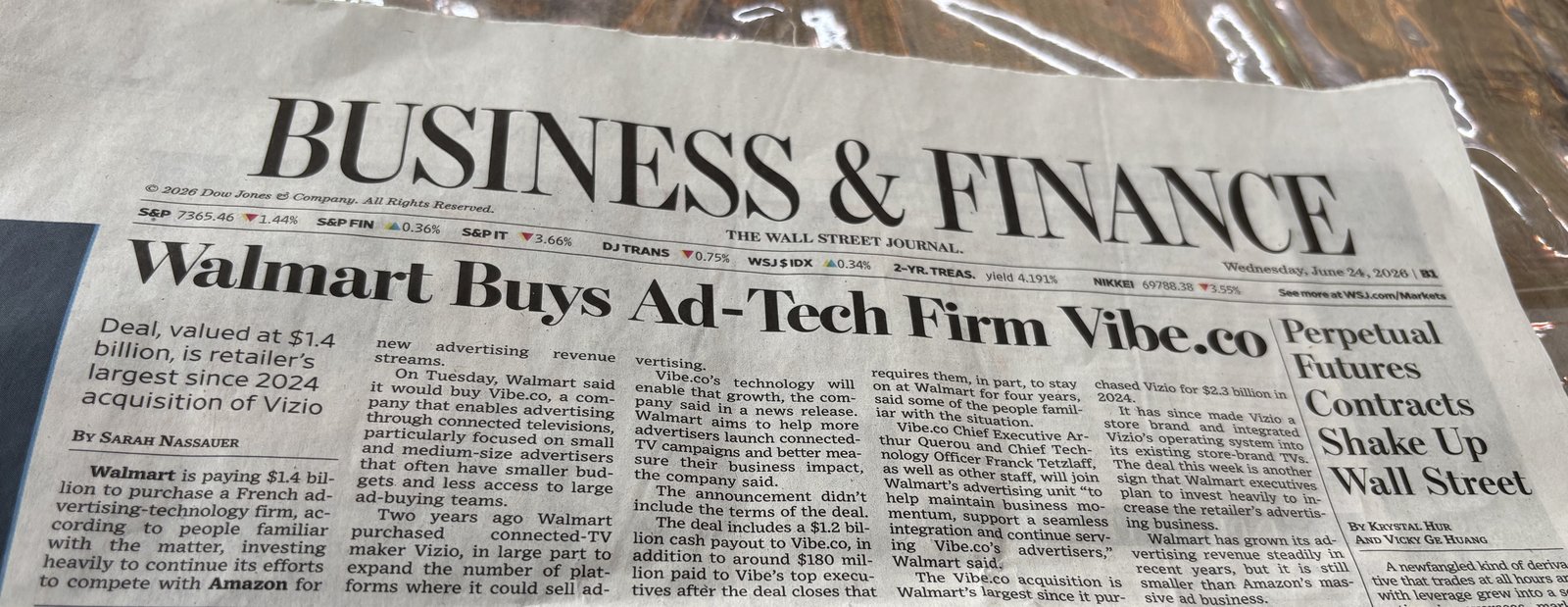 Breaking news on the Croisette: The Wall Street Journal reports Walmart’s $1.4 billion capability acquisition of Vibe.co, validating the aggressive push of retail media into programmatic CTV.
Retail Media’s Two Fronts: Marketplace SMBs and Streaming Telemetry
If generative AI was the conversational darling of Cannes, Retail Media Networks (RMNs) represented the festival’s economic heavyweight. The sector is undergoing a structural evolution across two divergent frontiers:
1. The Marketplace SMB Surge: While retail media was initially dominated by consumer packaged goods giants defending digital shelf space, the highest-velocity growth in 2026 comes from third-party marketplace sellers. Thousands of cross-border SMB merchants, particularly across APAC, are scaling spend on products retailers do not physically stock. Major retailers have responded by deploying international engineering teams to onboard these sellers onto self-serve campaign tooling.
2. Offline Data, Non-Endemic Brands, and Connected TV: For traditional CPG giants, over eighty percent of retail transactions still occur within physical storefronts. Consequently, platforms that master the ingestion of offline Point-of-Sale (POS) conversion data back into digital bidding algorithms are commanding disproportionate market share. Advertisers who bridge this physical-to-digital divide can optimize online ad delivery against actual in-store cash register receipts.
This deterministic purchase telemetry has unlocked an enormous non-endemic advertising market. Financial institutions, automotive manufacturers, and telecom carriers are pouring budgets into retail media clean rooms to target audiences based on verified in-store grocery and electronics purchase histories.
This dynamic reached a climax during Cannes week when The Wall Street Journal splashed Walmart’s $1.4 billion acquisition of adtech platform Vibe.co across its front page. The transaction crystallizes the convergence between retail transaction telemetry and programmatic CTV: integrating Vibe’s streaming TV infrastructure with Walmart’s first-party shopper data democratizes television advertising for SMB sellers while arming enterprise brands with closed-loop CTV attribution.
Simultaneously, retail media infrastructure is shedding its batch-processing legacy. Advertisers are abandoning twenty-four-hour batch reporting in favor of sub-hourly streaming telemetry via architectures like Amazon Marketing Stream and clean rooms like Amazon Marketing Cloud (AMC). Real-time hourly signals enable automated bidding scripts to adjust bids dynamically based on immediate inventory availability, promotional pacing, and intraday conversion velocity.
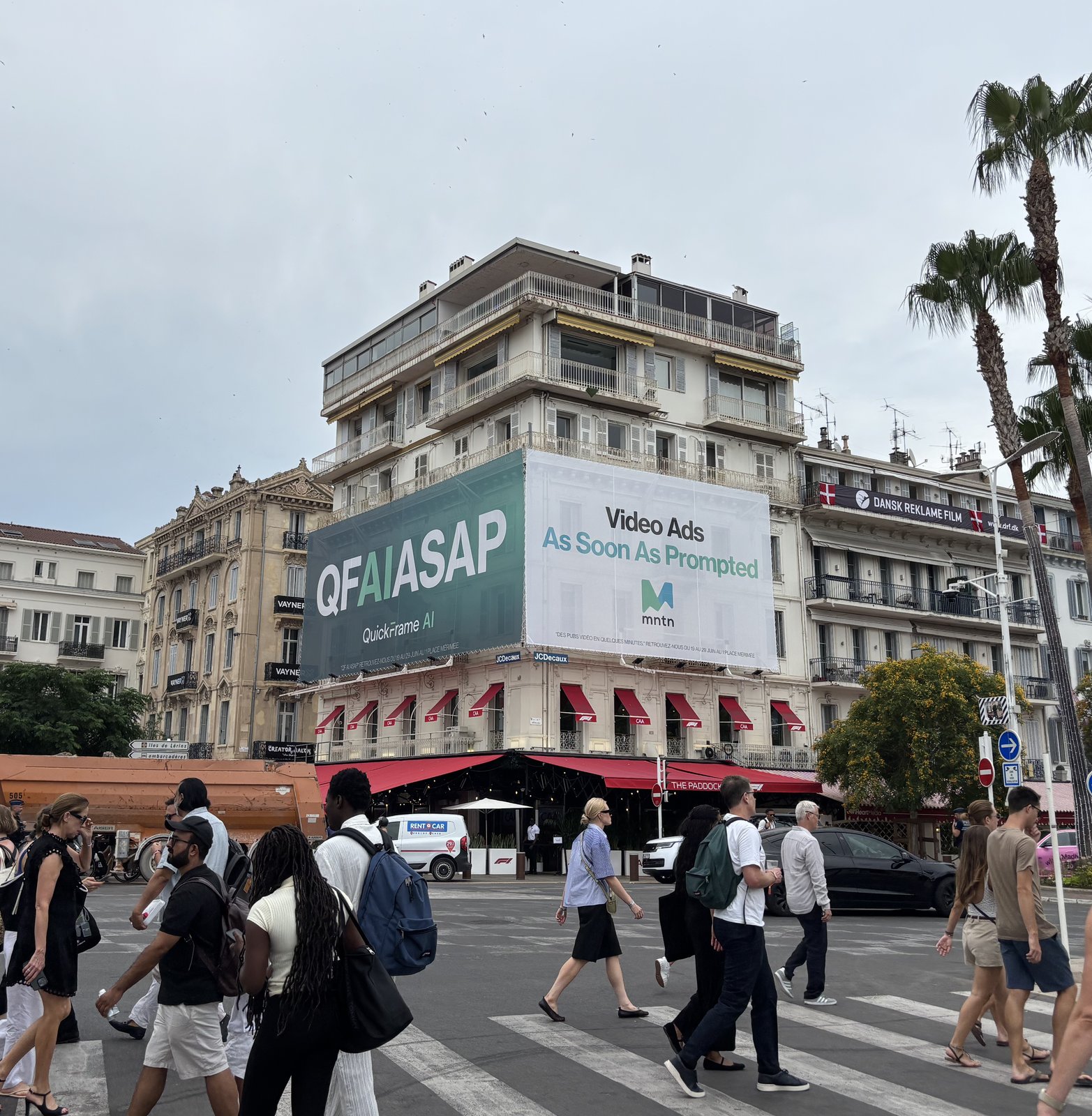 ‘Video Ads As Soon As Prompted’: MNTN and QuickFrame AI took over the Cannes cityscape, underscoring the rapid convergence of prompt-driven video generation and streaming television.
Building wraps across Cannes advertising “Video Ads As Soon As Prompted” illustrated this convergence: CTV has evolved into an agile performance channel driven by automated creative assembly and closed-loop retail attribution.
Agency Architectures: The Contractor vs. The Landlord
Beneath the platform announcements, the most consequential debate on the Croisette centered on agency operating models. As corporate clients demand transparency and data sovereignty, a structural divergence has emerged between two competing agency technology philosophies: The Contractor versus The Landlord.
| Dimension | The “Contractor” Model | The “Landlord” Model |
|---|---|---|
| Philosophy | “We build the house; you hold the deed.” | “We own the building; you lease the flat.” |
| Deployment | Client cloud tenants (BigQuery, Snowflake, Databricks). | Centralized agency platforms (OMNI, CoreAI). |
| Ownership | 100% client-owned models with total portability. | Proprietary algorithms; access terminates upon exit. |
| Target Fit | Enterprises demanding data sovereignty. | Brands seeking turnkey scale without engineering. |
| Economics | Strategic consulting and architecture fees. | Retainer markups and proprietary software margins. |
Agency leadership on both sides acknowledge that client expectations have shifted permanently. Even within traditional holding companies, specialized data consulting arms (like TRKKN within Omnicom) are experiencing surging demand for contractor-style composable architectures. Modern CMOs, chastened by past cycles of vendor lock-in, are increasingly unwilling to rent their data intelligence from an intermediary.
At the same time, mid-sized independent agencies are aggressively diversifying into data engineering and cloud consultancy. Facing steady fee compression on standard media buying, agencies are packaging pre-built, “on-rails” data solutions: standardized attribution pipelines, automated warehouse connectors, and pre-packaged clean room environments that can be activated inside a client’s cloud within days rather than months.
Taxonomy Before Autonomy: The Warehouse as Center of Gravity
The foundational reality that bound every technical discussion at Cannes 2026 together was disarmingly simple: you cannot deploy autonomous AI agents on top of broken data taxonomy.
As enterprise brands rush to experiment with agentic workflows (autonomous bid balancers, automated creative allocators, and cross-channel campaign auditors), they run directly into the hard wall of schema entropy. If an international consumer goods company uses six different naming structures for the same product line across twelve regional ad accounts, an LLM cannot reliably aggregate performance metrics or make reasoned allocation decisions.
Before benefiting from frontier AI reasoning, organizations must resolve unglamorous data governance: standardized UTM parameters, harmonized product metadata, and unified campaign taxonomy. Platforms enforcing taxonomy have quietly become vital gatekeepers in the modern marketing stack.
This dynamic has cemented the enterprise cloud data warehouse (Google BigQuery, Snowflake, Databricks, and Microsoft Fabric) as the undisputed center of gravity in marketing technology. Concurrently, enterprise advertisers resist surrendering raw first-party customer telemetry directly to opaque, platform-owned black boxes. Whether evaluating Google Data Manager, Meridian open-source MMM, or automated conversion upload tools, brands are reluctant to hand over data without an intermediary transformation layer. The prevailing enterprise doctrine in 2026 is clear: brands must own their data warehouse, control their taxonomy dictionary, and enforce clean room privacy boundaries before exposing telemetry to external models via controlled Model Context Protocols.
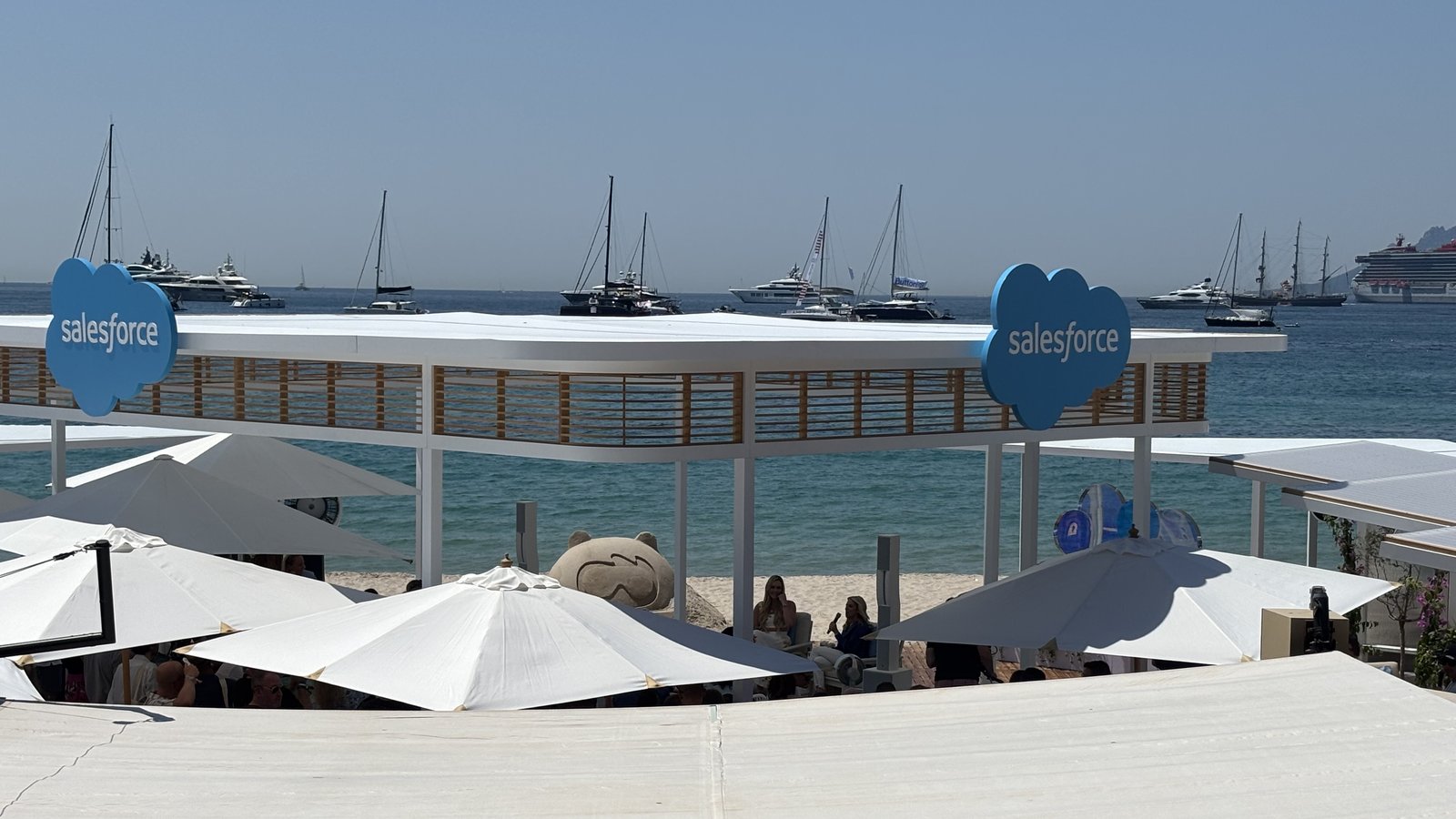 The Salesforce beach lounge: coastal pavilions provided the setting for candid debates on warehouse consolidation, CRM synchronization, and identity resolution.
The Horizon: From AI Curious to AI Confident
As the sun set over the Cannes harbor on Friday evening and the yachts began their slow retreat toward Monaco, the week’s enduring lesson came into sharp focus. The defining narrative of Cannes Lions 2026 was not the triumph of artistic whimsy over data, nor was it the uncritical coronation of generative AI.
It was the quiet, rigorous triumph of adtech plumbing.
The exuberant era of speculative AI experimentation in marketing has officially concluded. The competitive frontier in modern advertising is no longer defined by who can generate the cleverest prompt or produce the most surreal video demo. It belongs to the organizations that have built the hardened data foundations required to make AI agents operational, accountable, and economically accretive.
The winners of the next cycle will not be those who rented temporary apartments in proprietary holding company software, nor those who relied on opaque platform algorithms operating on stale batch reports. They will be the brands and agencies who treated data taxonomy as a non-negotiable prerequisite, engineered sub-second server-side signal pipelines, and anchored their business logic firmly inside client-owned cloud warehouses.
In digital marketing, inspiration may strike on the sunlit terraces of the Croisette; but enduring performance is decided in the dark, intricate architecture of the plumbing.